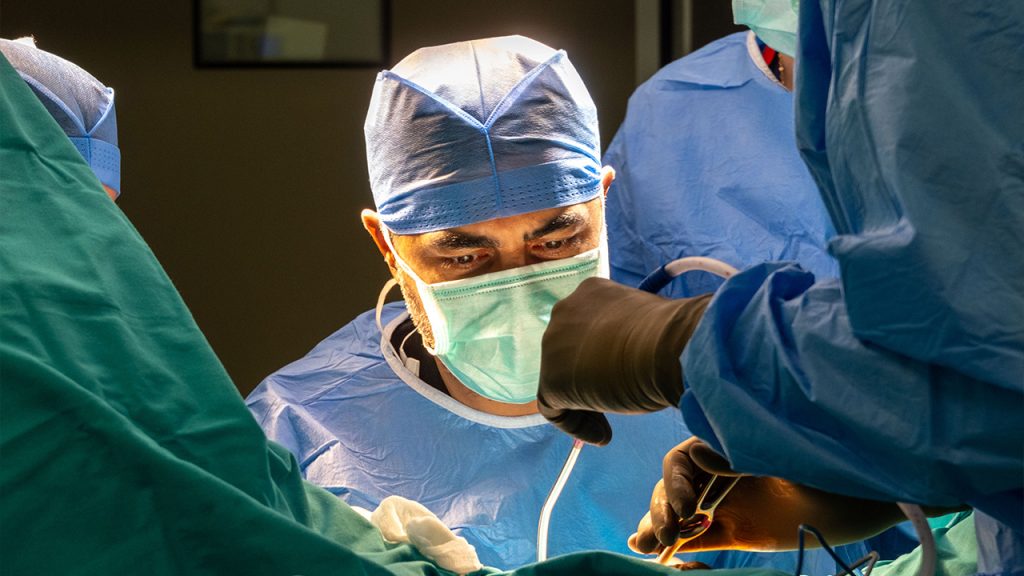
Urethral reconstruction is a surgical procedure performed to permanently open serious strictures that develop in the urinary channel (urethra) and to restore normal urine flow. This operation aims to eliminate the problems that directly affect the patient’s urination function and to significantly increase quality of life.
Main Purpose
- Repairing the narrowed urethral segment
- Permanently relieving urine flow
- Preventing recurrent obstructions
- Correcting the bladder emptying function
Areas of Use
1. Recurrent urethral strictures
- Strictures previously treated but that have re-formed
2. Stenoses developing after trauma
- Urethral damage after an accident or surgery
- Serious narrowing due to pelvic trauma
3. Failed endoscopic interventions
- Strictures recurring after dilation or internal cutting (internal urethrotomy)
4. Complex urethral diseases
- Long-segment strictures
- Areas severely narrowed with scar tissue
How Is It Performed?
Urethral reconstruction can be performed with different techniques according to the length and location of the stricture:
1. Removing the stricture and end-to-end joining
- The narrow segment is removed
- The healthy ends are joined
2. Use of a graft (patch)
- Tissues such as oral mucosa can be used
- The urethra is widened and reconstructed
3. Complex reconstruction
- Staged surgery may be required in long and multiple strictures
Advantages
1. Potential for a permanent solution
- With the right patient selection, long-term success is high
2. Significant improvement in urine flow
- Urination strength and comfort increase
3. Increases quality of life
- The need for recurrent catheters and interventions decreases
4. Reduces recurrent procedures
- Provides more permanent results than endoscopic treatments
Possible Risks
- Recurrence of the stricture
- Infection
- Urinary incontinence (rarely)
- Bleeding
- Need for a catheter
- Tissue healing problems
The Post-Operative Process
- Temporary catheter use is required
- The recovery process can take a few weeks
- Follow-up imaging (urethrography) may be performed
- Physical strain should be avoided
Frequently Asked Questions
Does it provide a permanent solution?
In urethral reconstructions performed with the appropriate technique and the right patient selection, high success and long-term permanence rates are achieved. However, success may vary depending on the length and location of the stricture and previous interventions.
Can a stricture form again after surgery?
Yes, recurrence can be seen in some patients, especially in complex and long-segment strictures. For this reason, regular follow-up is important.
How long does the catheter stay in?
Catheter use may generally be required for a few weeks. This period varies according to the surgical technique performed.
Is the surgery painful?
The procedure is performed under anesthesia. Afterward, there may be mild to moderate pain, which is brought under control with medication.
When is the return to daily life?
Although it varies according to the patient’s condition, a return to normal activities is usually possible within a few weeks.
Are sexual functions affected?
In most patients they are not affected, but depending on the location of the stricture and the extent of surgery, there may rarely be a temporary effect.
Is another endoscopic procedure needed?
Additional interventions may be required in failed or recurrent cases, but reconstruction surgery usually provides a more permanent solution.
Clinical Summary
Urethral reconstruction is an advanced surgical method applied especially in recurrent or complex urethral strictures, aiming to provide permanent urine flow by reconstructing the urinary channel. With the right patient selection and appropriate surgical technique, high success rates can be achieved.