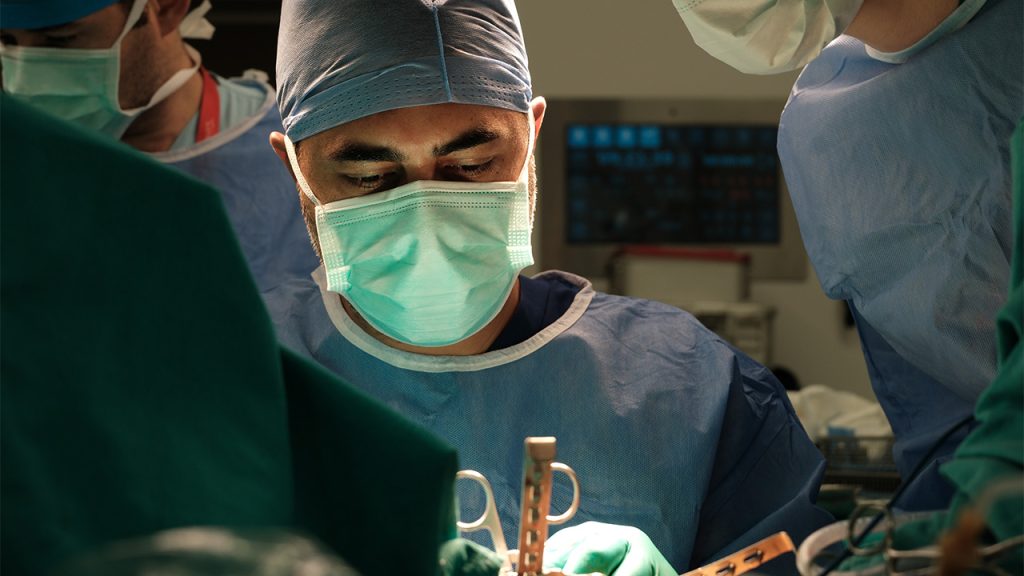
It is the procedure of removing large, complicated kidney stones, or those that cannot be reached with endoscopic methods, using minimally invasive surgical techniques by creating a small access route to the kidney.
It is accepted as one of the most effective treatment methods, especially in kidney stones with a high stone burden or a hard structure.
Main Purpose
- Complete clearance of large stones within the kidney
- Restoration of urine flow
- Preventing kidney damage
- Achieving a high stone-free rate in a single session
In Which Situations Is It Applied?
1. Large kidney stones
- Generally stones 2 cm and larger
2. Complex stone burden
- Multiple stones
- Widespread stone accumulation within the kidney
3. Situations where endoscopic methods are insufficient
- Stones that cannot be reached with RIRS/URS
4. Hard and difficult-to-break stones
- Stones that are difficult to fragment with a laser
How Is It Performed?
- A small (approximately 1 cm) entry is made into the kidney through the back
- The kidney is reached with a special camera and instrument system
- The stones are removed by breaking them up or whole
- If necessary, a temporary tube (nephrostomy) is placed in the kidney
Advantages
1. High success rate
- It is one of the most effective methods for large stones
2. Minimally invasive approach
- A much smaller incision compared to open surgery
3. Stone clearance in a single session
- A single procedure is sufficient in most patients
4. Fast functional recovery
- Kidney pressure decreases quickly
Possible Risks
- Bleeding
- Infection
- Temporary fever and pain
- Rarely, injury around the kidney
- The need for an additional procedure
The Post-Operative Process
- A few days of hospital observation may be required
- The nephrostomy tube may stay in temporarily
- Consuming plenty of fluids is recommended
- Follow-up imaging is performed
Frequently Asked Questions
Does it achieve complete stone clearance?
A high stone-free rate is achieved in most patients, but in some complex cases an additional procedure may be required.
Is it a painful procedure?
Because it is performed under general anesthesia, no pain is felt during the procedure.
How long is the recovery time?
A return to daily life is usually possible within a few days to 1 week.
Clinical Summary
Percutaneous nephrolithotomy is a minimally invasive surgical method with a high success rate, used in the treatment of large and complex kidney stones. It allows stones to be cleared safely and effectively through a small entry into the kidney.