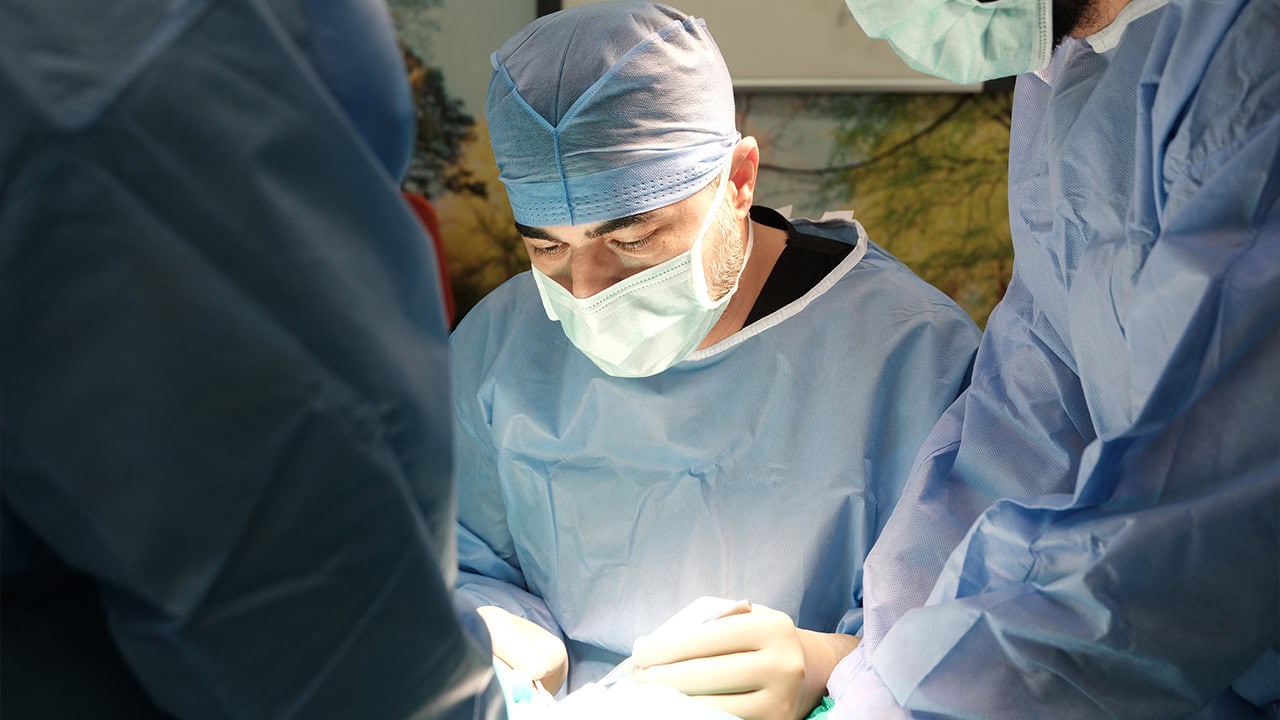
Laparoscopic surgery is a modern closed operation method performed using a camera and special surgical instruments through small holes opened in the abdominal wall. Thanks to the high-resolution imaging system, it allows the surgeon to perform the operation in a more precise, magnified, and controlled manner.
It is one of the advanced minimally invasive techniques widely used in urology for kidney, ureter, and some bladder surgeries.
Main Purpose
- Safe removal of diseased tissue
- Preservation of organ function
- Minimizing surgical trauma
- Providing fast recovery
Areas of Use
1. Kidney surgeries
- Kidney tumors
- Kidney cysts
- Kidney removal (nephrectomy)
2. Ureter surgeries
- Ureteral strictures
- Complex stone diseases (selected cases)
3. Bladder and reconstructive procedures
- Bladder capacity augmentation surgeries
- Urinary system repairs
How Is It Performed?
- Small incisions of 0.5 to 1 cm are made in the abdominal wall
- A working area is created with carbon dioxide gas
- The internal organs are imaged with a camera (laparoscope)
- The procedure is performed with surgical instruments
- Tissue removal or repair is carried out
Advantages
1. Smaller incisions
- Aesthetically better results
2. Less bleeding
- A more controlled procedure compared to open surgery
3. Less pain
- Post-operative comfort increases
4. Shorter hospital stay
- Patients are discharged faster
5. Faster recovery
- The return time to daily life is shortened
Possible Risks
- Bleeding
- Infection
- Anesthesia-related complications
- Rarely, the need to switch to open surgery
- Risk of organ injury (low rate)
The Post-Operative Process
- Usually a short hospital stay
- Early mobilization
- Mild pain control
- A return to normal activities in a short time
Frequently Asked Questions
What is laparoscopic surgery?
It is a modern operation technique performed with a closed method, using a camera and thin surgical instruments through small holes opened in the abdominal wall.
What is the difference from open surgery?
While a large incision is made in open surgery, small incisions are used in laparoscopy. For this reason, it usually provides less pain, less bleeding, and a faster recovery process.
How are the organs seen during the operation?
Thanks to the high-resolution camera system, the internal organs are projected onto the screen in a magnified form, and the surgeon performs the procedure through this image.
Can it be used in every urological disease?
No. Suitability is evaluated according to the type and extent of the disease and the patient’s general condition. In some advanced and complex cases, open surgery may be more suitable.
Is there pain after the operation?
There is usually much milder pain compared to open surgery. Most patients are comfortable with simple painkillers.
How long is the hospital stay?
In most cases, discharge is possible within a few days. However, this period may vary according to the procedure performed and the patient’s condition.
How long does the return to daily life take?
It is usually much faster than with open surgery. Many patients can return to daily life activities within 1 to 2 weeks.
Does a scar remain?
Because the incisions are small, minimal scarring usually remains and becomes less noticeable over time.
Is there a possibility of switching to open surgery during the operation?
Rarely, in cases of technical difficulty or unexpected situations, a switch to open surgery may be needed for safety.
Is there a risk of infection?
As with any surgical procedure, there is a risk of infection, however low, but this risk is usually lower with minimally invasive methods.
When can I shower after the operation?
Depending on the physician’s recommendation, showering is usually allowed within a short time.
Is another operation needed after laparoscopic surgery?
This depends entirely on the type of disease. In some cases, follow-up or additional treatment may be needed.
What is nutrition like after the operation?
Normal nutrition is usually resumed in a short time, but light foods may be recommended in the first days.
Does this method provide a permanent solution?
If the disease is a completely treatable condition, permanent results can be achieved. However, this depends on the type of disease.
What is the difference from robotic surgery?
While in laparoscopy the surgeon uses the instruments directly, in robotic surgery the robotic arms are controlled by the surgeon from a console. Both are minimally invasive methods.
What should be paid attention to after the operation?
It is important to avoid heavy lifting, to perform wound care properly, and not to miss follow-up appointments.
Clinical Summary
Laparoscopic surgery is one of the cornerstones of the minimally invasive approach in urology, offering the possibility of highly precise surgery through small incisions. With its less pain, faster recovery, and better cosmetic results, it is today an important alternative or standard treatment method in many urological diseases.