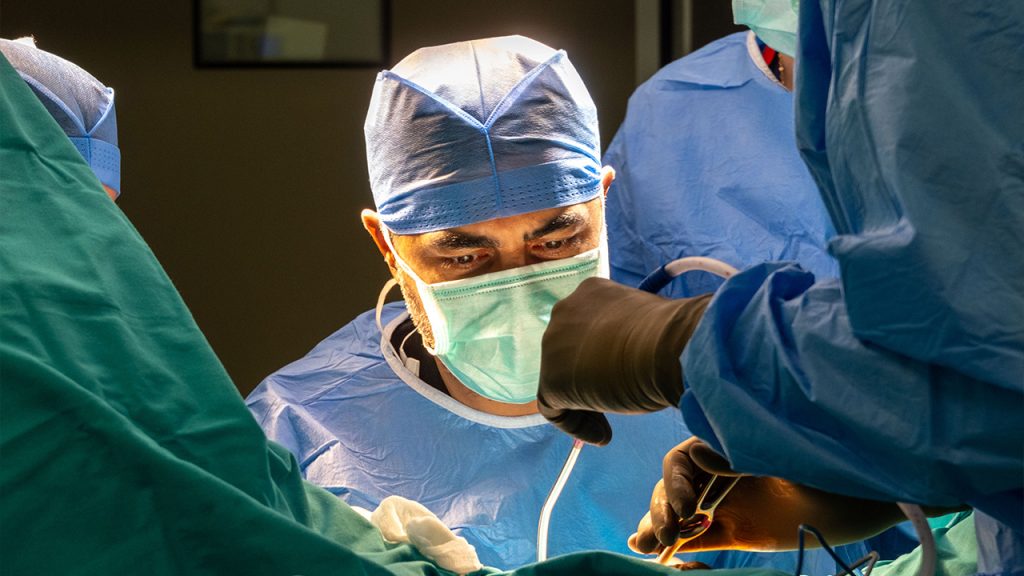
Prostate surgery covers the surgical methods used in the treatment of benign prostatic hyperplasia (BPH) and prostate cancer. Today, robotic surgery in particular stands out as one of the most advanced technological approaches in prostate surgery.
Thanks to robotic systems, the surgeon can work with millimetric precision accompanied by high-resolution 3D imaging; this aims to significantly improve both oncological control and functional outcomes.
Why Does Robotic Prostate Surgery Stand Out?
Robotic surgery provides important advantages in very delicate anatomical areas such as the prostate:
- 3D imaging magnified 10
to 15 times - Precise control that eliminates hand tremor
- The ability to protect nerve and vascular structures more clearly
- Minimal tissue trauma
- More controlled bleeding management
These features strengthen the nerve-sparing approach especially in prostate cancer surgery.
Main Purpose
- To completely remove prostate cancer surgically
- To eliminate urinary obstruction
- To protect nerve and muscle structures to the maximum degree
- To support urinary control and sexual functions
- To increase quality of life
Areas of Use
1. Prostate cancer
- One of the most frequently preferred surgical methods in localized prostate cancer
- Can be performed together with lymph node evaluation
2. Advanced BPH (selected cases)
- A minimally invasive solution especially in large prostates
- Can be an alternative to open surgery
3. Urinary retention and BPH with complications
- Patients who have developed catheter dependence
- Cases not responding to medication and endoscopic treatment
How Is Robotic Prostate Surgery Performed?
- Small holes are made in the abdominal area
- The robotic arms are positioned
- The surgeon manages all movements from the console
- The prostate tissue is removed precisely
- A nerve-sparing technique is applied if necessary
- The bladder and urinary channel are rejoined
The Advantages of Robotic Surgery
1. High precision
- Millimetric surgical control
- Superior visibility in difficult anatomical areas
2. Nerve protection advantage
- The nerves responsible for erection and urinary control can be better protected
3. Less bleeding
- Small vessels are managed in a more controlled way
4. Fast recovery
- Smaller incisions
- Less pain
- Shorter hospital stay
5. Faster return to social life
- The time to return to daily life is shortened
Possible Risks
Although robotic surgery is advanced technology, the risks are not completely eliminated:
- Temporary urinary incontinence
- A change in erectile function
- Infection
- Rarely, the need for another intervention
- Anastomosis (connection line) healing problems
The Post-Operative Process
- Mobilization usually within 1
to 2 days - Temporary catheter use
- Fluctuation in urinary control in the first weeks
- Regular PSA and follow-up checks
- Gradual return to physical activity
Frequently Asked Questions
Why is robotic surgery so preferred?
Because it offers more precise, more controlled, and more function-preserving surgery in an area with a high density of nerves and vessels such as the prostate.
Does the robot perform the surgery?
No. The surgeon performs the entire surgery. The robot is only a technological tool that applies the surgeon’s hand movements with high precision.
Is urinary control affected?
There may be temporary urinary incontinence in the early period. However, significant improvement is seen over time in most patients.
Can sexual functions be preserved?
Thanks to nerve-sparing robotic surgery techniques, the chance of preserving functions may increase in suitable patients. However, this depends on the spread of the disease.
Is robotic surgery a definitive solution?
In prostate cancer, the success of surgery depends on the stage of the disease. In BPH, it usually provides long-term relief.
What is the recovery process like?
It is faster than open surgery; most patients return to their daily lives in a short time.
Clinical Summary
Robotic prostate surgery is today one of the most advanced minimally invasive methods in prostate cancer and selected BPH cases. With its high precision, nerve protection advantage, and potential for fast recovery, it is at the center of the modern surgical approach that targets both oncological success and quality of life together.