Ureteral cancer is a rare but clinically noteworthy type of cancer that develops in the ureter, the channel that carries urine from the kidney to the bladder. It mostly originates from urothelial cells and can show biological behavior similar to bladder tumors.
One of the most important features of the disease is that it can progress without symptoms in the early stage and is often noticed through bleeding in the urine or during imaging tests. For this reason, careful evaluation is very important in patients in the risk group.
Risk Factors
- Smoking
- A history of bladder cancer
- Exposure to chemical substances
- Chronic urinary tract irritation
- Advanced age
- Certain genetic predispositions
Symptoms
- Blood in the urine (the most common finding)
- Flank and lower back pain
- A decrease in urine flow or a feeling of obstruction
- Recurrent urinary tract infections
- Swelling in the kidney (hydronephrosis)
- Weight loss and weakness in the advanced stage
Diagnostic Methods
- CT Urography: One of the most important imaging methods
- Ureteroscopy: Directly viewing the tumor with a camera and taking a biopsy
- Urine cytology
- MR imaging when necessary
- Blood and kidney function tests
Treatment Approach (Predominantly Surgical)
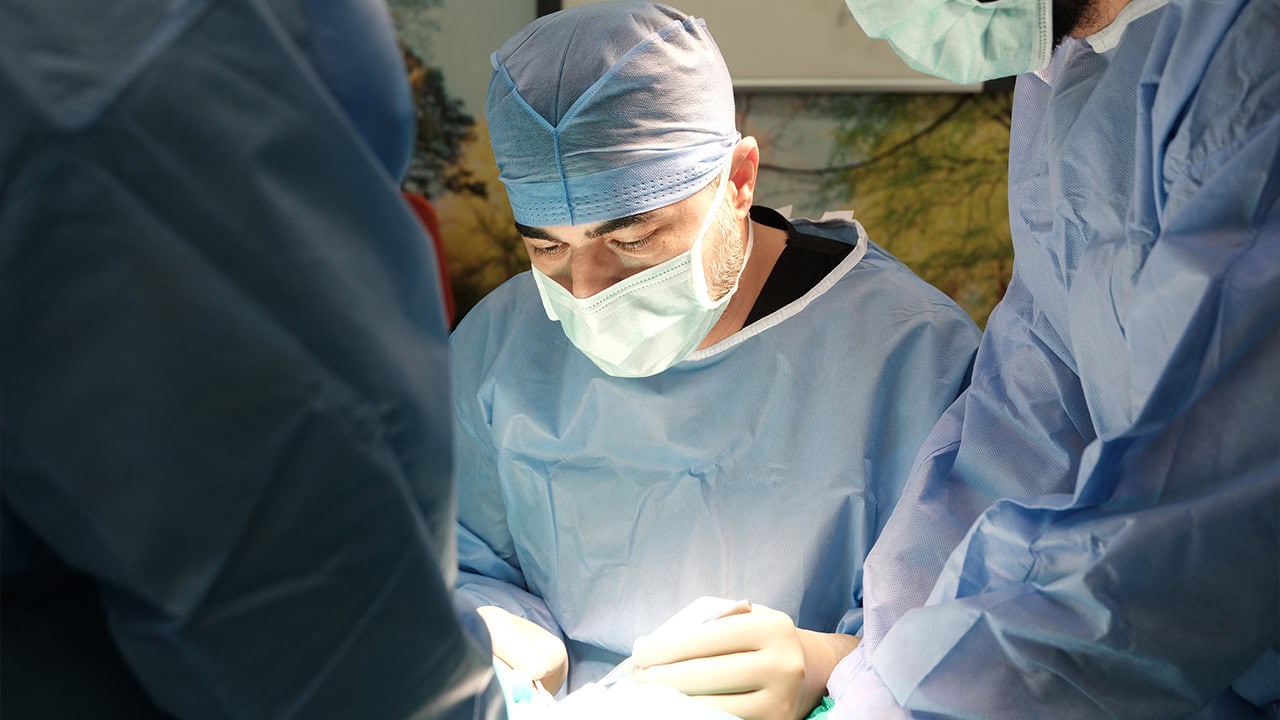
In ureteral cancer, the treatment plan is determined according to the location, size, and spread of the tumor. However, today the surgical approach forms the basis of treatment.
Surgical Treatment (Gold Standard)
- Segmental resection: Removal of only the tumorous ureteral segment (in selected cases)
- Radical nephroureterectomy: Removal of the kidney and ureter together
- Lymph node dissection: May be added in patients with a risk of spread
Especially in high-risk or widespread disease, removing the kidney and ureter together to completely clear the tumor is the most reliable and effective method.
Minimally Invasive Surgery
- Laparoscopic surgery
- Robotic surgery techniques
- The advantages of less bleeding, a smaller incision, and faster recovery
Additional Treatments
- Chemotherapy (in advanced-stage patients)
- Intravesical treatments (in selected cases against the risk of recurrence)
- Close and regular follow-up protocols
Clinical Evaluation
- Although rare, it can follow an aggressive course
- Surgical treatment is the main determinant of success
- Because of its biological relationship with the bladder, there is a risk of recurrence
- Early diagnosis increases the chance of kidney-preserving treatment
Frequently Asked Questions
Can ureteral cancer be caught early?
Yes, but because it often shows no symptoms, it is usually detected incidentally during imaging methods.
What is the most effective treatment for ureteral cancer?
The most effective and permanent treatment is surgical intervention. The complete removal of the tumor forms the basis of treatment.
Does the kidney have to be removed in every patient?
No. In early and limited tumors, only a part of the ureter can be removed. However, in many cases, the ureter may need to be removed together with the kidney.
Does the cancer recur after surgery?
Yes, there is a risk of recurrence, especially in the bladder. For this reason, regular cystoscopic and radiological follow-up is essential.
Does robotic surgery provide an advantage?
Yes. Because it offers the possibility of more precise surgery, it provides the advantages of tissue preservation, fewer complications, and faster recovery.
Is there a relationship between ureteral cancer and bladder cancer?
Yes. Because both develop from similar cells, in a patient who has one, the risk of seeing it in the other increases.
What is the quality of life like after surgery?
Life with a single kidney continues without problems in most patients. However, regular check-ups and healthy lifestyle habits are important.
Clinical Summary
Ureteral cancer is a rare disease that must be managed carefully. Today, the surgical approach forms the basis of treatment. Thanks to modern surgical techniques applied especially in suitable patients, successful results are being achieved in terms of both disease control and quality of life.