Penile Prosthesis (Happiness Rod)
The penile prosthesis is a permanent and effective surgical treatment option for men who experience erection problems and do not benefit from other treatment methods. The erection disorder, called “erectile dysfunction” in medicine, is a condition that can seriously affect men’s quality of life and sexual life.
Today, thanks to advancing surgical techniques and modern prosthesis technologies, penile prosthesis operations can be performed with high success and patient satisfaction rates.
What Is a Penile Prosthesis (Happiness Rod)?
In the treatment of erectile dysfunction, oral medications are preferred as the first step. In patients who do not benefit from these medications, injections into the penis or vacuum devices can be applied as a second step. If sufficient results cannot be achieved despite all these methods, penile prosthesis surgery stands out as the most effective and permanent solution.
Penile prostheses are usually silicone-based medical devices that are surgically placed inside the penis and provide an erection mechanically. After the prosthesis is implanted, the patient can have sexual intercourse without experiencing erection problems.
Who Is a Penile Prosthesis Suitable For?
Penile prosthesis surgery is generally preferred in the following cases:
Long-standing erectile dysfunction
No response to oral medications
Failure of injection or vacuum treatments
Erectile dysfunction due to diabetes, vascular diseases, or nerve damage
Erection problems developing after prostate cancer surgery
Appropriate patient selection is one of the most important factors in the success of the operation.
What Are the Types of Penile Prostheses?
Malleable (Semi-Rigid) Penile Prosthesis
Has a permanently rigid structure
Can be bent and flexed
Easy to use
However, the natural erection sensation is more limited
Inflatable Penile Prosthesis
Can be two-piece or three-piece
Can be inflated and deflated as desired
Provides a more natural erection and relaxation
Is the most frequently preferred type of prosthesis today
Inflatable prostheses offer more natural results both aesthetically and functionally.
How Is Penile Prosthesis Surgery Performed?
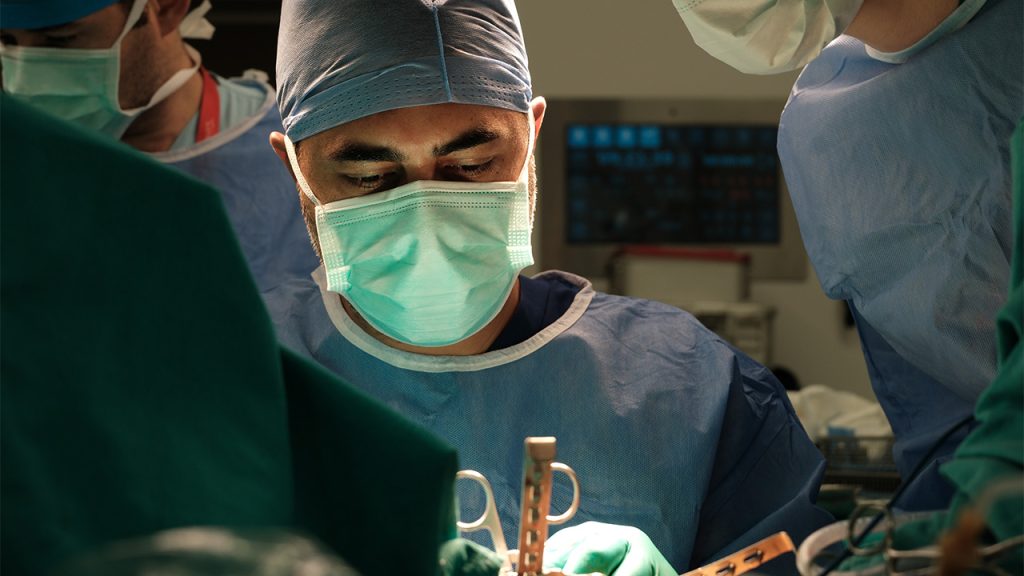
Penile prosthesis surgery can be performed under general or lower-body (spinal) anesthesia. The duration of the operation varies on average between 45 to 60 minutes depending on the type of prosthesis chosen.
The purpose of the surgery is:
To provide an erection of the penis
To make upward angulation of the penis possible
⚠️ A penile prosthesis does not provide growth in penile length or thickness and does not increase sexual desire. It restores the erection function.
Advantages of the Penile Prosthesis
An erection can be achieved whenever desired
The duration of the erection can be fully controlled
It offers a natural sexual intercourse experience
The erection problem is permanently eliminated
Patient and partner satisfaction is quite high
The penile prosthesis is one of the methods with the highest patient satisfaction in the treatment of erectile dysfunction.
The Post-Operative Process
The hospital stay is usually between 2 to 5 days
Water contact with the wound is not recommended for the first week
Sexual intercourse and masturbation should be avoided for at least 6 weeks
The return to sexual life is planned after the follow-up examination
In cases of fever, severe pain, discharge from the wound, redness, or difficulty urinating, a doctor must be consulted.
Possible Risks and Complications
The most important risk in penile prosthesis operations is the development of infection. For this reason, antibiotic treatment is administered after the operation and hygiene rules are followed carefully.
In operations performed by experienced surgeons, the risk of complications is quite low.
Our Approach to Treatment
Our approach in penile prosthesis treatment focuses on:
Scientific and up to date surgical techniques
Personalized prosthesis selection
Confidentiality and patient privacy
Long-term patient satisfaction
The goal is not only to provide an erection but to restore the patient’s self-confidence and quality of life.