Azoospermia is the absence of any sperm cells in the semen and is considered one of the most serious, yet today largely manageable, causes of male infertility.
This condition can develop due to disorders in sperm production (testicular causes) or blockages in the sperm channels (obstructive causes).
While genetic factors play a role in some patients, in others it can arise due to past infections, varicocele, hormonal disorders, or congenital channel anomalies.
Types of Azoospermia
- Obstructive azoospermia: Sperm production is present but there is a blockage in the channels
- Non-obstructive azoospermia: Sperm production is reduced or absent
Symptoms
- Inability to have children
- Usually no outward symptoms
- Shrinkage in testicular volume in some patients
- Decreased sexual desire due to hormonal disorders (in some cases)
Diagnostic Methods
- Repeated sperm analyses
- Hormone tests (FSH, LH, testosterone)
- Genetic examinations
- Testicular ultrasonography
- Advanced urological evaluation when necessary
Treatment and Approach
The treatment of azoospermia is planned entirely according to the cause:
Microsurgical Methods
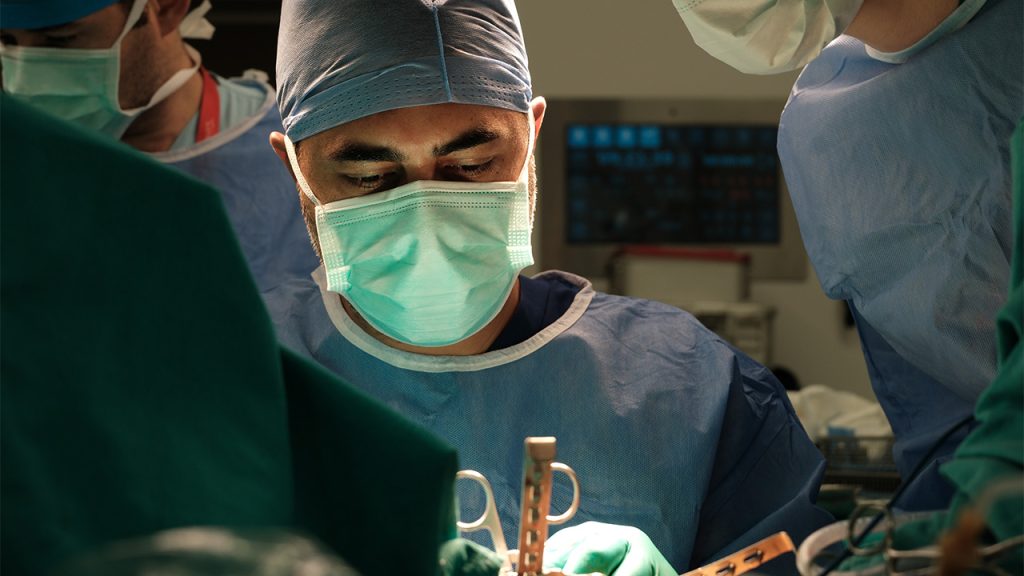
- MicroTESE (obtaining sperm from the testicle under a microscope)
- Procedures to search for and retrieve sperm from the testicle
Today, it is the method offering the highest chance of success even in non-obstructive azoospermia.
Obstruction Surgeries
- Opening of blockages in the sperm channels
- Reconstructive microsurgical procedures
Hormonal Treatments
- Regulatory treatments for hormone deficiencies
- Protocols supporting sperm production
Assisted Reproductive Techniques
- IVF (in vitro fertilization)
- ICSI (microinjection)
The chance of pregnancy increases significantly with sperm obtained through MicroTESE.
Important Points
- Azoospermia does not mean definite infertility
- Many patients can become fathers today
- Accurate diagnosis and an appropriate surgical approach play a critical role in success
Frequently Asked Questions
Can azoospermia be completely treated?
It depends on the cause. In the obstructive type, high success can be achieved with surgery. In the non-obstructive type, it is possible to obtain sperm with MicroTESE.
Can someone with azoospermia become a father?
Yes. Today, many patients can have children with microsurgery plus in vitro fertilization methods.
What is MicroTESE?
It is the procedure of examining the testicular tissue under a microscope to find areas with sperm production and obtain sperm.
Is there hope if there is no sperm at all?
Yes. Even in non-obstructive azoospermia in particular, there may be sperm production in some foci.
Can genetic azoospermia be treated?
In genetic causes, treatment is limited, but the chance of becoming a father is possible with assisted reproductive techniques.
Does varicocele cause azoospermia?
Yes, in some patients it can seriously affect sperm production, and improvement can be achieved with surgery.
How long does treatment take?
Diagnosis, evaluation, and treatment planning can be completed within a few weeks; however, the process varies from person to person.
What is the success of MicroTESE?
It varies according to the patient’s condition, but in suitable cases there is a meaningful chance of obtaining sperm.
Is azoospermia progressive?
It depends on the cause. While some conditions remain stable, others may worsen over time.
Does lifestyle have an effect?
Yes. Smoking, stress, obesity, and toxic exposure can negatively affect sperm production.
Clinical Summary
Although azoospermia is one of the most complex conditions of male infertility, today it is a manageable clinical picture that offers the possibility of becoming a biological father in many patients thanks to microsurgical techniques (especially MicroTESE), hormonal treatments, and assisted reproductive methods.