Robotic Urethroplasty
Robotic urethroplasty is an advanced reconstructive urology surgery used in the treatment of structural disorders that develop in the urinary canal, primarily urethral stricture. In this method, the narrowed or damaged segment of the urethra is repaired with high precision using robotic surgery technology.
Robotic urethroplasty is a modern surgical approach that offers permanent and successful results, especially in difficult, long-segment and recurrent urethral strictures.
Urethral Stricture and Reconstructive Surgery
Urethral stricture occurs when a narrowing forms in any part of the urinary canal, making urine flow difficult. If left untreated, it can lead to serious problems such as:
Incomplete emptying of the bladder
Frequent urinary tract infections
Bladder and kidney damage
Although closed methods can be applied in short and simple strictures, in recurrent or long strictures the most effective treatment method is urethroplasty.
What Is Robotic Urethroplasty?
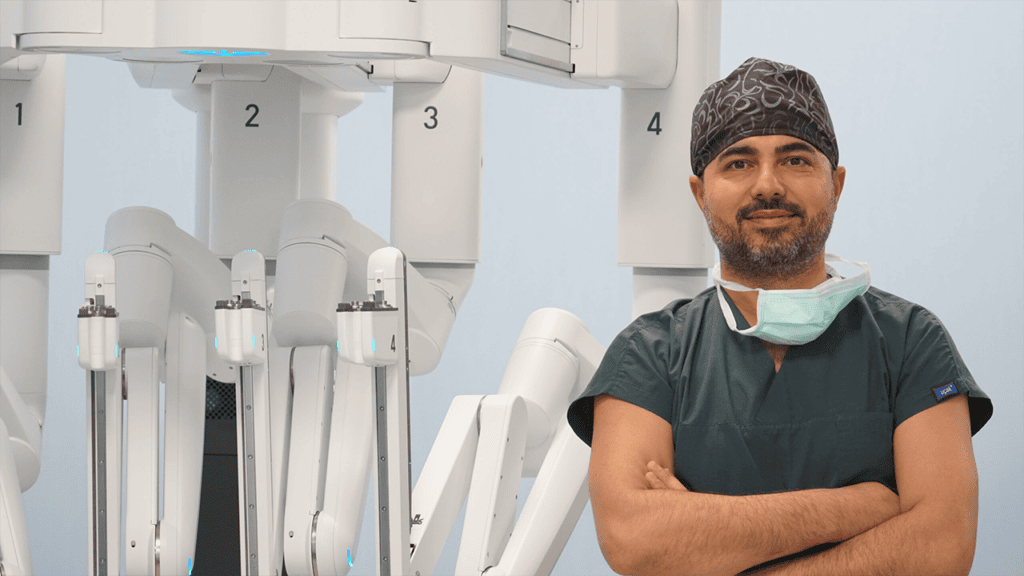
Robotic urethroplasty is an advanced form of open reconstructive surgery in which the operation is performed using the da Vinci robotic surgery system. Thanks to the robotic system, the surgeon can work extremely precisely in narrow and deep anatomical areas.
This method offers the following advantages:
Tremor-free surgical movements
Three-dimensional high-resolution image
Precise suturing and tissue repair
Who Is It Suitable For?
Robotic urethroplasty is generally suitable for the following patients:
Those with long-segment urethral stricture
Patients who have undergone multiple closed procedures without benefit
Those with trauma-related urethral damage
Strictures that develop after prostate surgery
Recurrent and complex urethral strictures
Patient selection is made on an individual basis after a detailed evaluation.
The Advantages of Robotic Urethroplasty
The main advantages that robotic surgery provides in reconstructive urology are:
More precise tissue repair
A better field of view
Less bleeding
A lower risk of complications
A faster recovery process
Higher success rates in the long term
Robotic surgery provides a significant advantage, especially in repairs performed in the deep pelvic area.
How Does the Surgical Process Take Place?
The operation is performed under general anesthesia
It can take an average of 2 to 4 hours
The narrowed urethral segment is removed or repaired
When necessary, the patient’s own tissues, such as the lining of the mouth (buccal mucosa), are used
The urethra is reconstructed to create the urinary canal
After the operation, a urinary catheter is temporarily placed in the patient.
The Post-Operative Period
Recovery Process
The hospital stay is generally between 3 to 5 days
The catheter is usually kept in for 2 to 3 weeks
Recovery is evaluated with follow-up imaging
Return to Daily Life
Patients can usually return to their daily lives within a few weeks. Physical activities are increased gradually.
Possible Risks and Complications
Robotic urethroplasty is a safe method in experienced hands. However, as with every surgical procedure, there are some risks:
Infection
Bleeding
Rare recurrence of the stricture
Urine leakage (temporary)
Robotic surgery helps minimize these risks.
Why Is Robotic Surgery Important?
Reconstructive urology is one of the most difficult areas of urology and one that requires experience. Robotic urethroplasty offers a treatment option that is function-preserving, permanent and has a high success rate.
The aim is not only to correct urine flow but to secure the patient’s quality of life in the long term.
A Personalized and Long-Term Approach
Every urethral stricture patient is different. The most suitable surgical approach should be planned taking into account:
The location of the stricture
Its length
Previous treatments
The patient’s general condition