Robotic Adrenalectomy
Robotic adrenalectomy is an advanced robotic surgery method used for the surgical removal of the adrenal glands located above the kidneys. Adrenal gland diseases can directly affect the hormonal balance and lead to serious problems with blood pressure, weight, heart rhythm, and metabolism.
Thanks to robotic surgery technology, adrenal gland operations can be performed in a safer, more precise manner that increases patient comfort.
The Adrenal Glands and Their Importance
The adrenal glands are responsible for producing vital hormones such as cortisol, aldosterone, adrenaline, and noradrenaline. These hormones play a critical role in:
Blood pressure
Metabolism
Stress response
Electrolyte balance
Tumors that develop in the adrenal glands or lesions that secrete excessive hormones can cause serious systemic effects in the body.
In Which Cases Is Robotic Adrenalectomy Performed?
Robotic adrenalectomy is usually preferred in the following cases:
Hormone-secreting adrenal tumors
Pheochromocytoma
Aldosteronoma (Conn’s syndrome)
Cortisol-secreting tumors (Cushing’s syndrome)
Adrenal masses that show growth in size
Adrenal tumors suspected of being malignant
The treatment decision is made after a detailed endocrinological and radiological evaluation.
What Is Robotic Adrenalectomy?
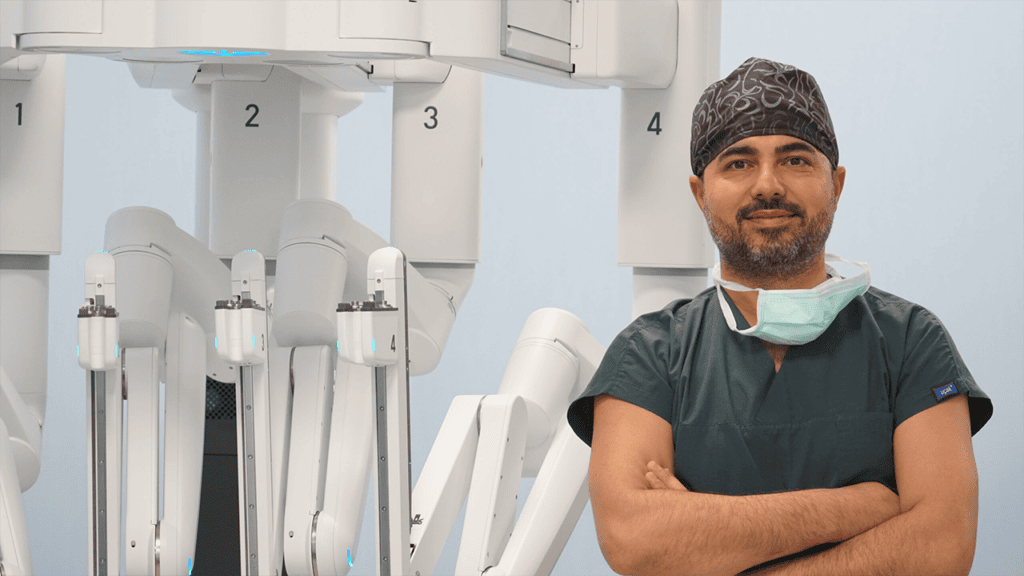
Robotic adrenalectomy is a minimally invasive method in which the operation is performed with the da Vinci robotic surgery system. From the console, the surgeon directs the robotic arms to reach the adrenal gland with high precision.
The robotic system provides:
Three-dimensional high-resolution imaging
Tremor-free surgical movements
Superior maneuverability in narrow anatomical areas
which offer great advantages in adrenal gland surgery.
Advantages of Robotic Surgery
Robotic adrenalectomy offers significant advantages compared to open surgery:
Less bleeding
Smaller surgical incisions
Less pain
Faster recovery
Shorter hospital stay
Faster return to daily life
Surgical safety is especially important in hormone-secreting tumors.
How Does the Surgical Process Take Place?
The operation is performed under general anesthesia
It takes an average of 1.5 to 3 hours
The adrenal gland can be removed completely or partially
The surgery is completed while preserving the surrounding vessels and organs
The patient is mostly discharged within 2 to 4 days.
The Post-Operative Period
Hormone Monitoring
In the post-operative period, hormone levels are closely monitored. Some patients may need temporary or permanent hormone replacement therapy.
Return to Daily Life
Patients usually return to their normal lives within a short time. Heavy physical activities are temporarily restricted.
Possible Risks and Complications
As with any surgical procedure, there are some risks in robotic adrenalectomy as well:
Bleeding
Infection
Damage to neighboring organs (rarely)
Hormonal imbalances
When performed by experienced teams, these risks are at a minimum level.
Why Is Robotic Surgery Preferred?
Adrenal gland surgery requires high attention due to delicate vascular structures and hormonal effects. Robotic surgery offers maximum safety, minimum trauma, and high surgical success.
A Personalized and Multidisciplinary Approach
The robotic adrenalectomy process is planned in a multidisciplinary manner together with the following units:
Urology
Endocrinology
Anesthesia
Radiology
The aim is not only to remove the adrenal gland but also to preserve the patient’s hormonal balance and quality of life over the long term.