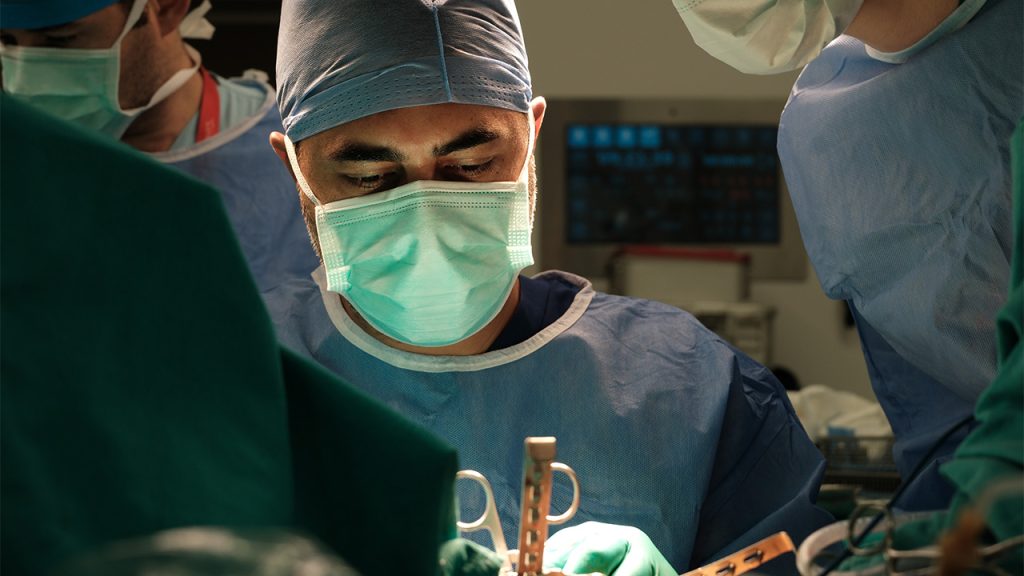
Open surgery is the classic surgical method used in the treatment of urological diseases, referring to operations in which the skin and underlying tissues are opened with a surgical incision to reach the relevant organ directly.
It is usually preferred in advanced stage diseases, large masses or in situations where minimally invasive methods are insufficient.
Main Purpose
- Complete removal of the diseased tissue
- Correction of complex anatomical problems
- Restoration of organ functions
- Performing reconstruction when necessary
Areas of Use
1. Large tumors
- Kidney tumors
- Bladder tumors
2. Complex stone diseases
- Very large or widespread kidney stones
- Stones that cannot be cleared with other methods
3. Reconstructive surgeries
- Ureteral repairs
- Urethral reconstructions
- Correction of congenital anomalies
4. Traumatic injuries
- Kidney, bladder or ureteral damage
- Situations requiring emergency surgery
How Is It Performed?
- The relevant area is reached by planning an appropriate incision
- The diseased tissue is removed or repaired under direct visualization
- A drain or catheter is placed if necessary
- The layers are closed anatomically
Advantages
1. It provides a wide field of view
- The surgeon has direct and clear control
2. It is effective in complex cases
- It offers a safe option in difficult and advanced cases
3. The possibility of reconstruction
- Repair and correction can be performed in the same session
Disadvantages and Risks
- A larger surgical incision
- More pain
- Longer hospital stay
- Risk of infection
- Bleeding
- A prolonged recovery time
The Post-Operative Process
- A longer follow-up period in the hospital
- A drain and catheter may be used
- Restriction in physical activities
- Monitoring of wound healing
Frequently Asked Questions
Is the recovery time long?
Yes. It requires a longer recovery time compared to minimally invasive methods.
Why is open surgery preferred?
It is preferred in situations involving the size of the tumor, anatomical difficulties or where endoscopic/laparoscopic methods are insufficient.
Is there a lot of post-operative pain?
It can be more than with other methods, but it is managed with appropriate pain control.
Clinical Summary
Open surgery is the most traditional method in urology, providing the widest surgical access. Although minimally invasive techniques have become widespread today, it still continues to be an important treatment option in complex and advanced cases.