Kidney cancer is a malignant tumor that develops as a result of the uncontrolled proliferation of cells in the kidney tissue. In most patients it progresses without symptoms in the early stage and is often detected incidentally during an ultrasound or tomography performed for another reason.
Early diagnosis directly affects treatment success.
Risk Factors
- Smoking
- Obesity
- Hypertension
- Genetic predisposition
Symptoms
- Blood in the urine
- Flank / lower back pain
- A sensation of a mass
- Unexplained weight loss
Diagnosis
- Ultrasonography
- Computed Tomography (CT)
- Magnetic Resonance (MRI)
- Blood tests
Treatment Approach
In kidney cancer, the basis of treatment is surgical methods. The aim is to completely remove the tumor and, if possible, to preserve kidney function.
Surgical Treatment (Current Approach)
- Partial nephrectomy (kidney-sparing surgery)
- Radical nephrectomy (complete removal of the kidney)
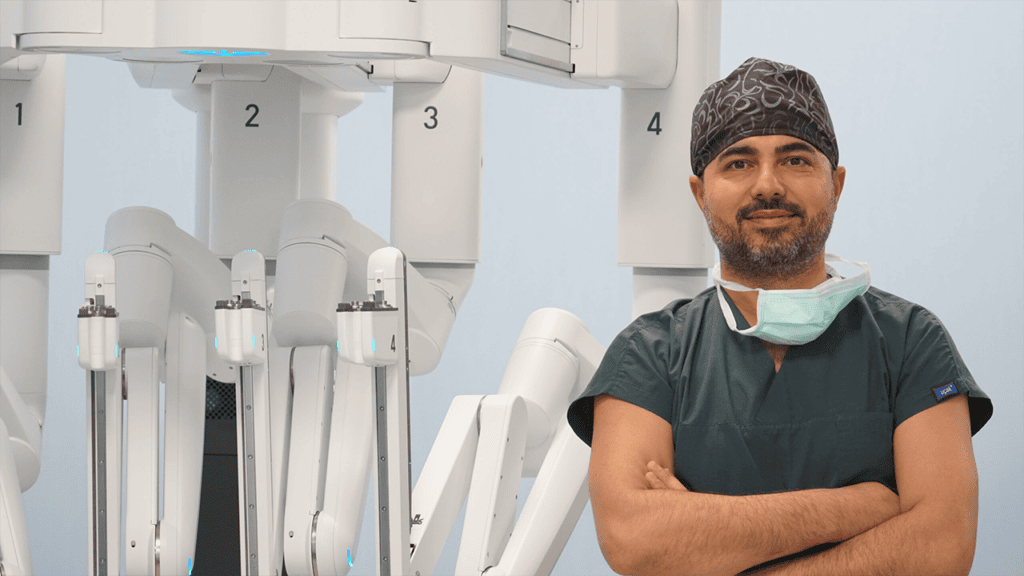
Today, in many patients, surgery is performed with robotic surgery systems.
An Advantageous Approach with Robotic Surgery
Robotic surgery is an important turning point, especially in the treatment of kidney cancer.
- Operation with smaller incisions
- Removal of the tumor with high precision
- The ability to preserve healthy kidney tissue
- Less risk of bleeding
- A faster recovery process
- A shorter hospital stay
Especially in small and medium-sized tumors requiring partial nephrectomy, robotic surgery is one of the most important modern approaches that increases the success of kidney preservation.
Other Treatment Options
- Ablation methods (in selected small tumors)
- Targeted therapies in advanced-stage patients
- Immunotherapy
Clinical Evaluation
- The surgical success rate is high in the early stage
- Kidney-sparing surgery is increasingly being performed
- Robotic surgery provides an important advantage in terms of function preservation
Frequently Asked Questions
Is kidney cancer caught early?
Yes. In most patients it can be detected incidentally at an early stage during imaging performed for another reason.
Why is robotic surgery preferred?
Because it provides the ability to work more precisely, it can help with the complete removal of the tumor and the preservation of the kidney.
Is every kidney cancer operated on with robotic surgery?
No. The method is determined according to the size and location of the tumor and the patient’s general condition.
Does the kidney have to be completely removed?
Not always. In suitable cases, only the tumor can be removed while the kidney is preserved.
Clinical Summary
In kidney cancer, the main treatment approach is surgery. Today, robotic surgery technology in particular is one of the most important modern methods that increases treatment success thanks to more precise tumor removal and the preservation of kidney tissue.